Thursday, November 25, 2010

Playfish Games on Facebook


             In class this week, we have been learning about gaming studies. So, I discovered on Facebook the Playfish games that are big players in the social game space. Playfish is leading the social gaming industry and the company is changing the way people play games by creating more social and connected experiences. The games are designed for friends to play together.
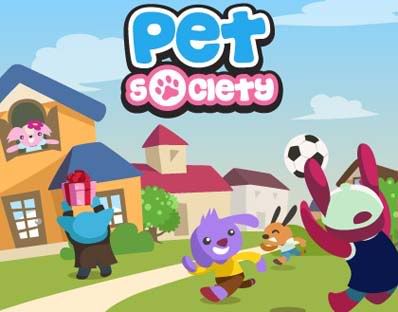
            The Playfish games are amongst the most acclaimed and popular online. Some of the popular games offered on Facebook are Pet Society, Restaurant City, Hotel City, Country Story and Who Has the Biggest Brain? So, in this case Facebook would be the machine, which is the platform that is being played on. I believe the Playfish games are diegetic because elements contained within the game’s total world narrative. For example, in the game Pet Society one inhabits this living social world with you’re friend’s pets.
            Playfish is well known as the keystone game developer for Facebook. A positive thing about Playfish games is they will eventually drive down the costs of traditional marketing. The company markets through the games by selling virtual goods inside its games. The company made a smart choice choosing Facebook, which has over 500 million users. Social games will play a big part of the future of the video games industry. This is going to be the next hot trend because it has already attract millions of daily players.
Wednesday, November 17, 2010

Childhood Cancer Awareness

The purpose of Childhood Cancer Awareness is to spotlight childhood cancer and survivorship issues related to childhood cancer.

To grab people's attention to childhood cancer we want to create a Facebook group like Kick it Kodi. The group will include a real story about a child who is fighting cancer. Second, we plan to use commercials and videos of actual children fighting for their life. The video will include a tour of a hospital like St. Jude and an interview with a young child and their family about their daily routine. We want to promote this awareness through commercials like the St. Jude's one. Last, we plan to use newspaper and choose child of the month who has cancer. There will be an article on their story. By using these pieces of media we plan to have emotional appeal and bring this cause to life by using true stories.

- Jennifer and Kyle

Monday, November 15, 2010

A Parallel Image

            
            When I came across this image, “A Parallel Image” by Gebhard Sengmüller, it really grabbed my attention. I loved how the artist used the parallel timeline technique of the past to create an effect, which is futuristic in its sensorial impact. This image is unlike conventional electronic image transmission procedures and is technologically transparent by conveying to the viewer a correspondence between the real world and transmission that can be sensually experienced.
            “A Parallel Image” is an electronic camera obscura, which digitizes an image and simultaneously transmits all elements to a location. This interactive sculpture is based on the fictive assumption that the currently still valid principle of electronically transmitting moving images, namely by breaking them down into single images and image lines. He does this by connecting a camera and a monitor using about 2,500 cables. I thought that was so interesting and never knew techniques or art like this even existed. It is so fascinating how he attempts a highly elaborate parallel transmission of every single pixel from the sender to receiver.
            I never knew work like this was art or how much is put in to make such a masterpiece. New media art is new to my knowledge and this artist really impressed me. The lighting is beautiful and I love how he created alternative ordering systems for media content. This really opened my eyes to a different kind of art.  

Monday, November 8, 2010

Lady Gaga

            Creative Commons is a non-profit organization that is dedicated to expand a variety of creative works available for others to build upon legally to share. It is a great tool that is a free charge to the public. Flickr users offer their work under the Creative Commons license. Creative Commons has a license that is often called “free advertising” license because it allows people to download their works and share them with others as long as they mention you and link back to you. They cannot change the image in any way or use them commercially.
            Like this image of Lady Gage below: 
This is a picture of Lady Gaga that was taken using an iPhone Apple by John H, docjohnboy. He took this at Bazaar and this is not used for any commercial use. He made this visible to everyone and he was sharing this to show off that he saw Lady Gaga at a small venue and got her to sign a CD.
            Here’s another photo of Lady Gaga below:
This is a photo of Lady Gaga singing and this was a commercial image. Under the Attribution license it states that work should be specified by an author or licensor but not in any that suggests that they endorse you or your use of the work. This image is Lady Gaga on Walmart Soundcheck and on the site page it gives credit to Walmart soundcheck with a link. The user that posted this photo was Carrie Stern, kindofadraag.
            Last photo of Gaga below: 
This image was taken by a paparrazi of some sort and was taken when Lady Gaga was leaving the Perth Airport.  No real name is given on the page and only shows lovelyhk. However, in the description it states that the photo is a Non-Exclusive Pix by Flynet in 2009 and the author leaves a phone number and the name Nicolas. He is the author of this photo from Australia and is trying to sell the photo to USA. He is not using the photo for a commercial use but he is trying to sell this image. 
            All these photos are following the licenses of Creative Commons and provided the right credit for using a celebrity image. 

Thursday, November 4, 2010

The Social Factory

            The social media is spreading like a plague throughout the digital world. In Terranova’s article about free labor he defines the social factory as a process in which work processes have been shifted from factory to society. Facebook is a good comparison of this in the fact that so many Americans use it.
            Terranova’s article is basically all about labor in the digital world. This would include contributors to sites, lots of activity, and inviting people. Facebook’s contributors are the user’s and they are doing well with over 500 million users. The people that use Facebook are selling their information and are what keeps Facebook running. Which goes into Facebook activity in which users have become so active putting status, putting pictures up, posting on friends walls, etc. Facebook quantifies our social life and not only does it connect us with friends but it counts them. It allows you to invite people to be your friends to add.
            As Terranova says that cultural and technical work is central to the Internet but is also a widespread activity throughout advanced capitalist societies. Facebook provides a widespread of users and activity but has meaning. People constantly check up on their number of friends and had become a measure of something meaningful. Our online relationships are shadowed by power relations, by who has the most friends or wall posts. All these people on Facebook are contributing to the social factory.  

Wednesday, October 27, 2010

Social Media Tracking

Social media has become an integral part of modern society and everyone is using it for fun and to stay connected. Businesses are using these social media sites not only because it is a great way to market their company but for networking too. Most companies are taking advantage of these tools and emphasizing their company’s presence online and reaching more potential customers, employees and business partners. It is a good way to give a company unlimited exposure to relevant people without dealing with any cost issues.

How can companies keep track of what people are saying about them? There are several social media tools that can help monitor a company’s brand performance. First, is Twazzup, which is a dashboard progam that monitors Twitter.
Twazzup will inform you every time your keywords are mentioned in a tweet and will categorize a company’s results by link popularity, contributors, tagging clouds and users. Company’s can follow real-time stream of updates and using the right sidebar will show the top tweets and a list of the top tweeted stories about this topic, as well as related photos from twitpic. This program is a powerful and valuable social media-monitoring tool. 

Another one is Socialmention, which is like Google Alerts but for social media.
Socialmention is a social media search and analysis platform that collects user-generated content from across the universe into a single stream of information. This program will show user-defined statistics for your keywords over a thirty day period and measures what people are saying about the company, a new product or any topic across the web’s social media landscape in real-time. It monitors 100+ social media properties directly including: Twitter, Facebook, FriendFeed, YouTube, Digg, Google, etc. This is another good tool to monitor company through social media sites.

There are many other sites that will provide the same services for companies. This is a great tool to see what the public thinks about the company and how it is affecting society. 
10 Social Media Monitoring Tools

Thursday, October 21, 2010

Online Poker Identity

          Online users can create their own identity and have the power to create their own reality. According to Lisa Nakamura, “a user can become an ‘entrepreneur of the self’ through digital means reflects a technologically deterministic perspective, one that looks to technology to solve social problems.”
            My boyfriend loves poker and plays online and face-to-face games. A site he uses is Pokerstars.net, which is an online poker site where players are not defined by gender, race, religion, or social status. This site visualizes players by their generic avatar, and with text-only handles. Nakamura believes that when people create their own cartoon character online “they are exercising their ability to choose their gender, race, body shape, and many either aspects of embodied identity.” However, online poker sites users do not choose images of themselves so their gender or race is not revealed. When opening an account in a card room, users choose handles, which is their screen name. The players are represented by their handles and by avatars. Players choose from a list or have a chose to upload images to make their avatar in means of establishing their identity. In online poker games, players express their individuality through play within their conversation text in a variety of ways.
            Good poker players are able to read players and being able to observe and understand “tells.” Online it is hard to do this so it is important that players attempt to establish an understanding of the opponents’ playing styles.


          In conclusion, I think that users create their own identity or avatars and are capable of hiding who they really are within race and gender. Pokerstars.com is a game site that allows you to hide your identity and judge others on their poker status and their playing styles.